
JD
Guest
Not signed in
Guest
Not signed in
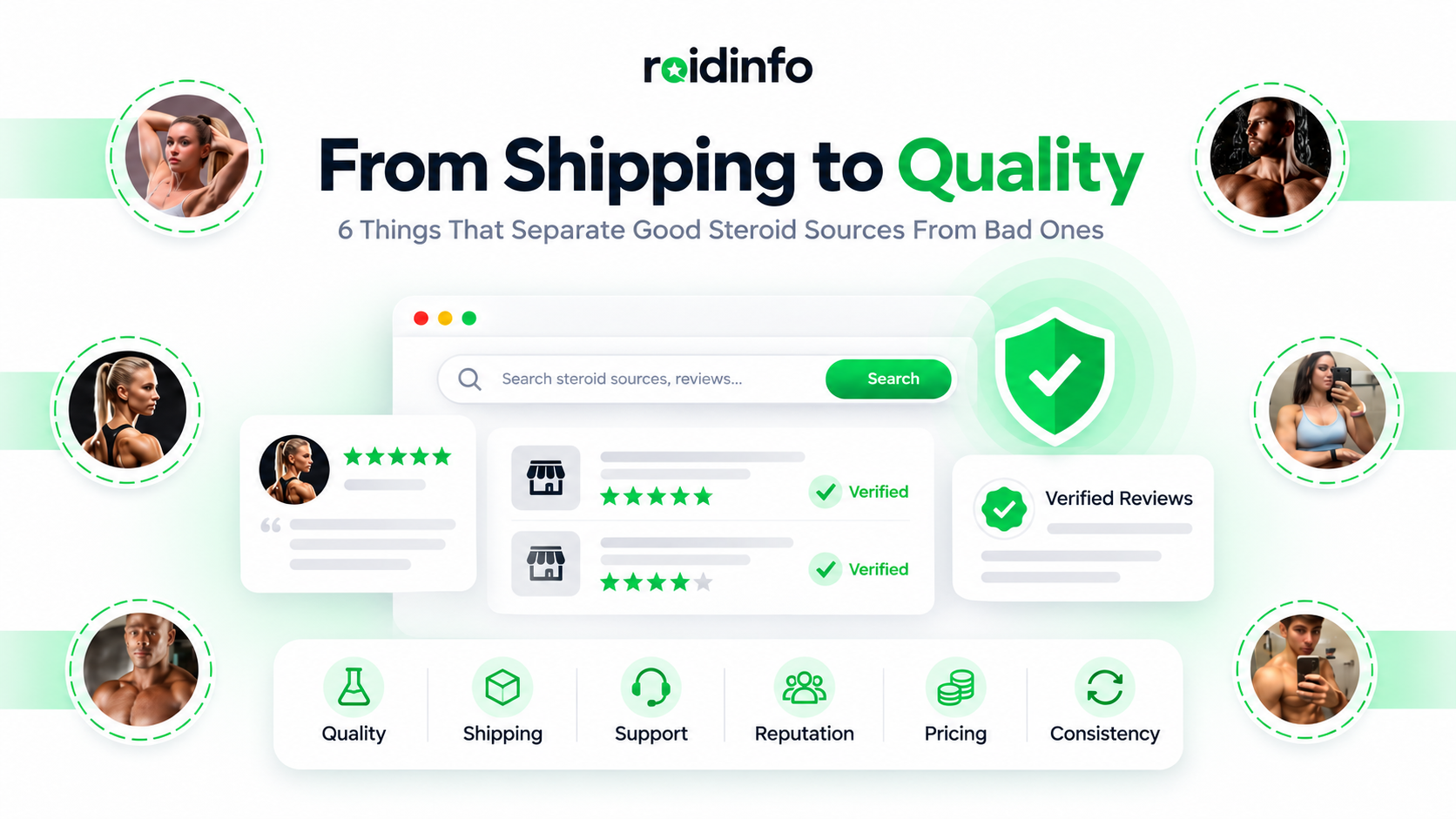
The label “good source” hides a lot of separate judgments. It can mean an order arrived on time, a support agent answered a question, or a reviewer was satisfied with a product. Those are not interchangeable reasons to trust an entire business.
That is why steroid source reviews need more than a star average. Product related feedback, shipping, customer support, independent reputation, pricing, and long term consistency each tell a different part of the story.
When reading Roidinfo Steroid Source Reviews, use these six factors to unpack the experience behind the rating. The aim is to distinguish specific, accountable service reports from vague reassurance—not to treat customer satisfaction as proof of product safety.
Fast shipping cannot answer a question about the contents of a package. Neither can a friendly support exchange. Product related feedback needs to be considered on its own, with a clear distinction between what the customer observed and what they believe it means.
An incorrect item, damaged packaging, or a label that differs from the description is a specific observation. “Excellent quality” is a conclusion that needs an explanation. When the reviewer describes repeated experiences, check whether they identify the items and dates rather than applying one opinion to an entire range.
Reports of perceived effects do not establish a product’s identity, concentration, purity, or sterility. Unsafe online pharmacies may supply medicines with the wrong ingredients, incorrect amounts of an active ingredient, or harmful substances. Positive feedback cannot rule those possibilities out.
Read how a discrepancy was handled, too. Was the concern acknowledged? Did the explanation address it? That response may tell you something about accountability, but it still does not turn a customer service record into evidence of pharmaceutical manufacturing standards.
The distinction that matters: a useful review describes the product issue precisely; a weak one asks you to accept a quality verdict without showing its basis.
“Fast” needs a starting point. One reviewer may count from payment, another from dispatch. Unless those details are clear, two delivery reports can appear comparable when they are describing different parts of the process.
A more informative account separates processing, dispatch, tracking updates, and arrival. It also explains what was promised. In a fictional example, a six day delivery falls within a seven day estimate but misses a two day promise. The elapsed time is identical; the accuracy of the expectation is not.
Delays should be read in context rather than treated as automatic proof of fraud. What deserves attention is a repeated, unexplained mismatch between the stated timeline and the experiences reported. Clear updates and a documented outcome add information; another vague assurance does not.
Our guide to shipping timelines in US steroid vendor reviews explains how to compare these details without relying on one unusually quick arrival. Keep delivery performance separate from conclusions about the contents.
Support is easiest to praise when nothing difficult has been asked of it. A conversation about an ordinary question and a dispute over a missing item place different demands on the person responding.
Read beyond “they got back to me quickly.” Did the answer address the question? Did the explanation stay consistent? Was the reviewer passed between people, asked to repeat information, or given a clear next step?
The outcome matters. A promised refund is not a confirmed refund. An acknowledgment of a complaint is not evidence that it was resolved. The review should make that difference visible, including any later update from the customer.
A courteous reply can coexist with poor follow through. Equally, a slower initial response may eventually lead to a clearly documented correction. Describe both the delay and the outcome rather than letting one erase the other.
For examples of unresolved communication patterns, read our analysis of scam steroid source warning signs. A complaint becomes more useful when you can follow what happened after it was raised.
A reputation is easier to examine when you can trace it to distinct experiences. “Everyone recommends them” offers little to check. Several people describing their own interactions, dates, and outcomes give you more material to assess.
Read feedback from different platforms, consider who wrote it, and examine both positive and negative comments. Review manipulation can work in either direction. A critical post is not automatically authentic, and a less than perfect rating does not prove independence.
Be careful about counting the same story twice. A complaint copied into several discussions remains one underlying account. Likewise, a familiar username repeatedly praising a business is not the same as several independent customers reporting similar experiences.
Our discussion of review volume versus steroid site reputation examines this distinction. A large total may justify a closer look, but the explanation inside the reviews matters more than the size of the number.
Price attracts attention because it is easy to compare at a glance. What is harder to see is whether two people are describing the same item, the same charges, and the same terms.
Look at the amount actually reported, including delivery charges and additional fees. Check what the refund terms say and whether the complaint concerns the advertised price or a later charge. These details are more useful than an unexplained verdict that a seller is “cheap” or “overpriced.”
Do not turn the comparison into a quality test. A high price does not establish authenticity, and a discount alone does not prove fraud. There is no basis in an individual review for assuming that every seller has the same manufacturing or service costs.
The warning becomes clearer when a price is used to hurry you past unanswered questions. Pressure to act immediately is a recognized scam tactic. An expiring offer is not evidence that an unclear transaction deserves your confidence.
One smooth experience cannot tell you how a business responds across months, different customers, and problems of varying difficulty. Long term consistency needs a record, not simply a repeated description of a source as reliable.
Compare recent accounts with older ones, checking when the experiences happened. A newly posted review may describe an old transaction. A follow up to an earlier complaint may contain more current information than a fresh but vague endorsement.
Pay attention to what repeats. Are customers still reporting the same unanswered question? Do later accounts describe a change in communication? Has a recurring problem actually stopped appearing, or is there simply less recent feedback to examine?
For more context, our guide to recent feedback and long term source reputation explains why neither a single new review nor an old average should settle the assessment. Where the record is thin, uncertainty is the appropriate conclusion.
These factors are not six boxes that can be checked to certify a seller. They are separate questions. An answer about one does not automatically provide an answer about the others.
Consider a fictional review describing an on time parcel, an incorrect item, and a refund that never arrived. The shipping record is favorable within that account. The order accuracy and resolution are not. Reducing the whole experience to “fast delivery, recommended” would conceal the most important complaint.
The same restraint applies to a negative rating. A delay followed by a documented resolution should not be rewritten as permanent silence. Keep the inconvenience, the response, and the outcome together.
Our explanation of the criteria behind steroid source ratings explores how these different subjects relate to review assessment. The six factors here are not an official scoring formula, and strong service feedback cannot cancel out an unanswered product safety question.
Use the same questions even when you like the price or already recognize the name. A consistent reading process is more useful than deciding first and searching for approval afterward.
Keep these six safeguards in view:
Establish whose record you are reading. Check the exact domain and business identity before attributing another website’s reputation to it.
Verify authorization separately from popularity. For U.S. prescription medicines, check the pharmacy’s license through the relevant state board, along with prescription requirements and access to a licensed pharmacist. Use the corresponding regulator in your jurisdiction elsewhere.
Compare firsthand accounts. Read the criticism, the response, and the latest update rather than stopping at the star rating.
Keep labels and codes in perspective. A barcode or packaging image is not a laboratory finding and cannot, by itself, establish composition or sterility.
Do not let an offer set the pace. Missing information still matters when the price is attractive.
Reassess a familiar reputation. Recognition and previous positive feedback do not answer a new, specific concern.
A small “test order” is not a substitute for these distinctions. Receiving a parcel would demonstrate one delivery, not verify its contents or guarantee later performance. Reviews should help you recognize the limits of the available information, not encourage you to experiment with an uncertain product.
A useful conclusion is specific: the reviewer reports clear communication, the delivery missed its stated estimate, or the complaint remains unresolved. Those observations are more informative than a blanket endorsement because you can see what supports them.
Bring that approach to Roidinfo. Open the individual reviews, read the follow ups, and compare the six areas before accepting an overall impression. Give a detailed complaint the attention it deserves, even when the headline score is high, and apply the same scrutiny to praise.
From shipping to quality, the important distinction in steroid source reviews is between promises and experiences that can be examined. When the evidence leaves a gap, keep it visible. A review platform should help you understand that gap—not encourage you to overlook it.