
JD
Guest
Not signed in
Guest
Not signed in
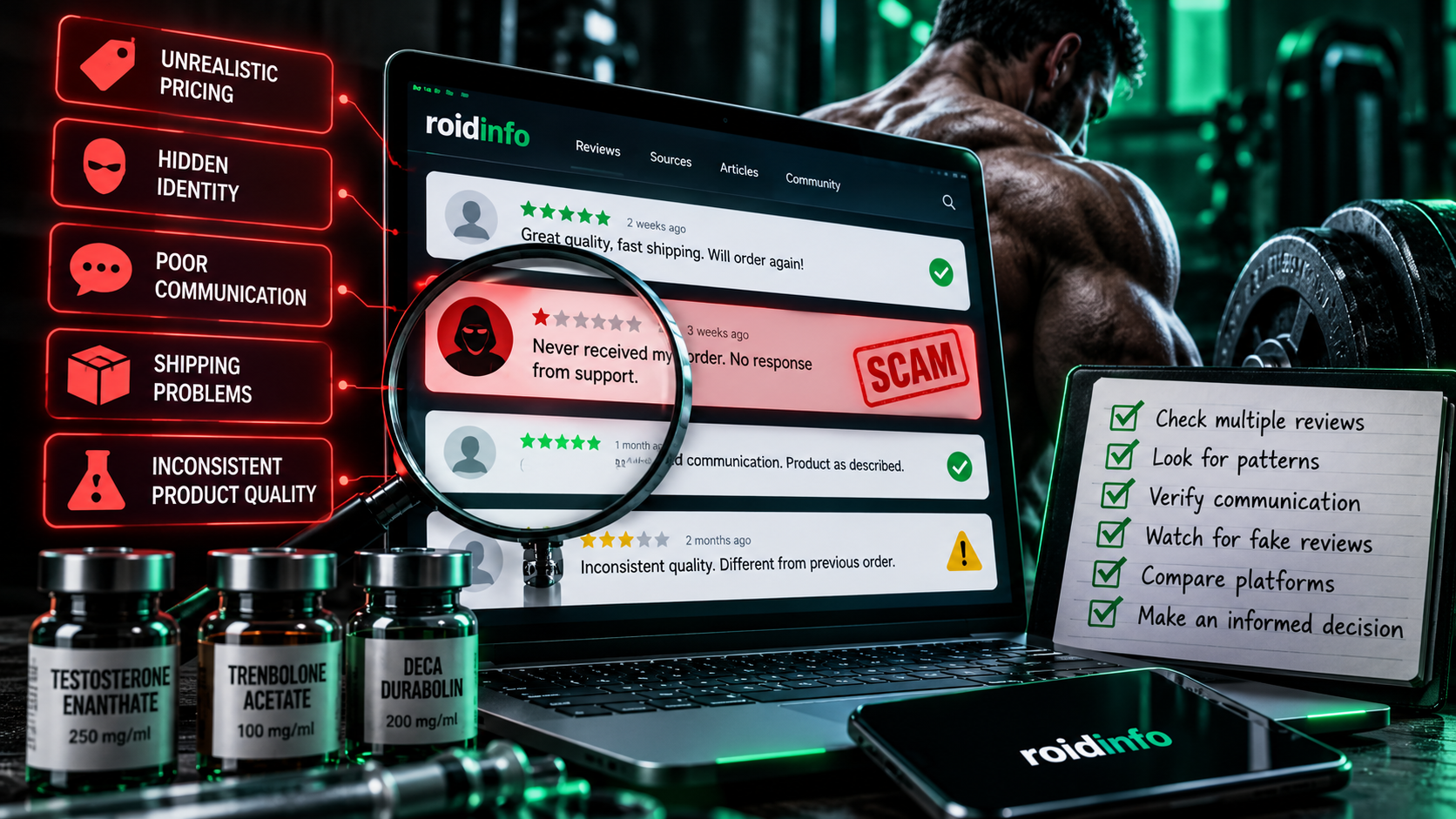
A missing parcel is a problem. A missing parcel, a changing explanation, and unanswered messages tell you more. The useful warning is often not one bad review, but the sequence of events behind it.
When looking for signs of a scam steroid source, pay attention to what reviewers can actually describe: the promise they received, what happened next, and how the seller responded when something went wrong. Those details give you more to examine than a high score or an angry verdict.
This guide focuses on the warning signs raised in review discussions, including unusually low prices, unclear business identities, poor communication, inconsistent product reports, and recurring delivery problems. It is a guide to evaluating claims, not a ranking of suppliers or a guarantee of product safety.
A tempting offer can make unanswered questions feel less important. Add a deadline or repeated requests for payment, and the pressure shifts from checking the facts to avoiding a supposedly missed opportunity. Pressure to act immediately is a recognized scam warning sign.
The important question is what the offer asks you to overlook. Would you accept the same missing contact information without the discount? Would an unanswered complaint seem less concerning if the website looked less polished?
Experience is not a reason to skip those questions. Familiarity with a name or a previous positive interaction does not resolve a new inconsistency. Treat the current claim as something to examine, rather than something an old impression has already confirmed.
An unusually low price deserves scrutiny, especially when it comes with pressure to pay before you can investigate. Online shopping scams can use deep discounts to draw people toward counterfeit goods or orders that never arrive.
But price is not a quality test. A higher charge does not verify authenticity, and a discount alone does not establish fraud. The useful question is whether the offer is encouraging you to dismiss information you would otherwise need.
Read what happened to the reviewer, not what they hoped the price meant. A comment saying an offer looked excellent tells you little about the outcome. An account explaining that payment was taken, the promised deadline passed, and support stopped responding gives you a specific sequence to assess.
A name at the top of a page is not enough to establish who is responsible for the operation. Compare the exact domain, the business identity stated in the policies, and the contact details given when a problem arises. Contradictions need an explanation.
In a review, distinguish “I could not find a phone number” from “the contact details changed and nobody answered my existing complaint.” Both raise questions, but they describe different situations. Be precise about what is missing or inconsistent.
Do not confuse a reachable seller with a licensed pharmacy, either. For U.S. prescription treatment, pharmacy licensing should be checked through the relevant state board. A review score or a claimed credential on a website cannot replace that check.
Slow replies can be frustrating, but response time alone does not establish a scam. Read what happens when the reviewer asks a specific question or reports a problem.
The concerns worth following include vague answers before payment, silence afterward, questions repeatedly avoided, and problems that remain unresolved despite repeated assurances. The difference between an explanation and a delay tactic becomes easier to examine when the reviewer gives dates and follows the conversation through.
Consider this fictional example: a customer is told three times that someone is “looking into it,” but each reply ignores the same question about a missing order. Three replies have arrived; the complaint has not moved forward. Counting responses would miss the issue.
Look for the last update. A seller saying a problem is resolved and a customer confirming the outcome are different parts of the record. Where they disagree, keep that disagreement visible rather than treating the more polished response as the final answer.
Product related complaints need particular care. A report about damaged packaging, an unexpected label, or an item that differs from its description raises a different issue from a comment saying the product “felt weaker.” Do not combine them as though they establish the same thing.
Perceived effects are not measurements of composition, concentration, or purity. Reviews cannot tell you whether a product contains the stated ingredient in the stated amount. Medicines from unsafe online sellers may contain incorrect amounts, the wrong ingredients, or harmful substances.
If several reviewers report discrepancies, examine what each person observed and what explanation followed. Missing details should remain missing; do not turn a suspected quality problem into a confirmed manufacturing finding without evidence.
The reverse matters too. Consistent praise does not prove consistent production, and one satisfactory delivery does not establish the safety of another product. Questions about a medicine belong with a licensed healthcare professional, not a popularity vote.
A website's own testimonials cannot give you the whole picture. Look across different review platforms and community discussions, checking that the comments concern the same domain. Read recent accounts and consider the reviewer's history rather than relying on star ratings alone.
A sparse review history is an information gap, not a verdict. A new or little discussed website may have few mentions for reasons you cannot establish from the page. You can acknowledge that uncertainty without declaring the business fraudulent.
A large footprint needs scrutiny as well. One account copied across several forums is still one account. Several people repeating that a source is “trusted” do not necessarily add several firsthand experiences.
Our guide to how fake reviews distort trust examines these limits. Neither an overwhelmingly positive profile nor a handful of critical comments settles authenticity on its own.
A delivery delay and a non delivery scam are not interchangeable. The review should explain the promised timeline, what the tracking showed, and what happened when the customer asked for help.
Be precise about status updates. For example, USPS explains that “Shipping Label Created, USPS Awaiting Item” means a label exists but the parcel has not yet been given to USPS. It is not confirmation that the package is moving through that carrier's network.
The concern becomes more substantial when distinct, recent accounts describe the same unresolved sequence: a missed promise, no useful explanation, and no clear outcome. That deserves attention without assuming that every delay has the same cause.
Read complaints through to their latest update. A subsequently confirmed delivery changes the record; another estimated date does not establish the same outcome. Also check whether several posts concern separate orders or all refer to one customer's experience.
You do not need to prove deliberate fraud before deciding that a website has not earned your trust. Start with the unanswered question rather than searching for a reassuring comment to cancel it out.
Check several independent accounts. Confirm the domain and distinguish firsthand experiences from repeated claims.
Compare the details. Note the dates, the problem, the response, and the latest reported outcome.
Keep the unresolved issues visible. A high average rating does not answer a specific complaint.
Refuse artificial urgency. Do not let a deadline pressure you into sharing money or personal information before your questions are answered.
Do not treat a small “test order” as a verification method. Receiving one parcel would show only that one parcel arrived. It would not establish product safety or guarantee how later interactions would unfold.
If you have already paid and suspect fraud, keep the messages and transaction records, and contact your bank or payment provider through its official channels promptly. Explain what happened and ask what recovery options are available. A refund is not guaranteed; sending more money does not resolve the uncertainty.
The difficult moment can come after you have noticed a problem. You may explain away unanswered questions because the offer is appealing, the name is familiar, or you have already spent time considering it. Ask whether you would accept the same explanation from a business you had never heard of.
Another mistake is allowing the number of positive comments to erase the substance of a complaint. Ten short compliments and one detailed account of an unresolved issue are not a vote in which the larger side automatically wins. Read what each contributes.
Apply that standard to criticism too. A forceful accusation is not a substitute for an account of what happened. Fair scrutiny means resisting both promotional reassurance and unsupported allegations.
Use steroid source reviews on roidinfo to examine the experiences behind a rating, not to replace your judgment with a number. Read the complaints, look for follow ups, and compare the details with other independent accounts.
Our Review Guidelines explain submission standards, prohibit paid or incentivized reviews, and describe human moderation. Our review and scoring process explains contact verification and how AI quality scores affect the overall rating. Those pages describe how feedback is handled; they do not certify the safety of a listed source or product.
The clearest way to assess a possible scam steroid source is to keep the claim, the experience, and the outcome separate. What was promised? What does the reviewer say happened? What, if anything, was resolved?
When the same important questions remain unanswered, you do not need a perfect score or a definitive accusation to make a decision. You can stop because the information is not good enough.