
JD
Guest
Not signed in
Guest
Not signed in
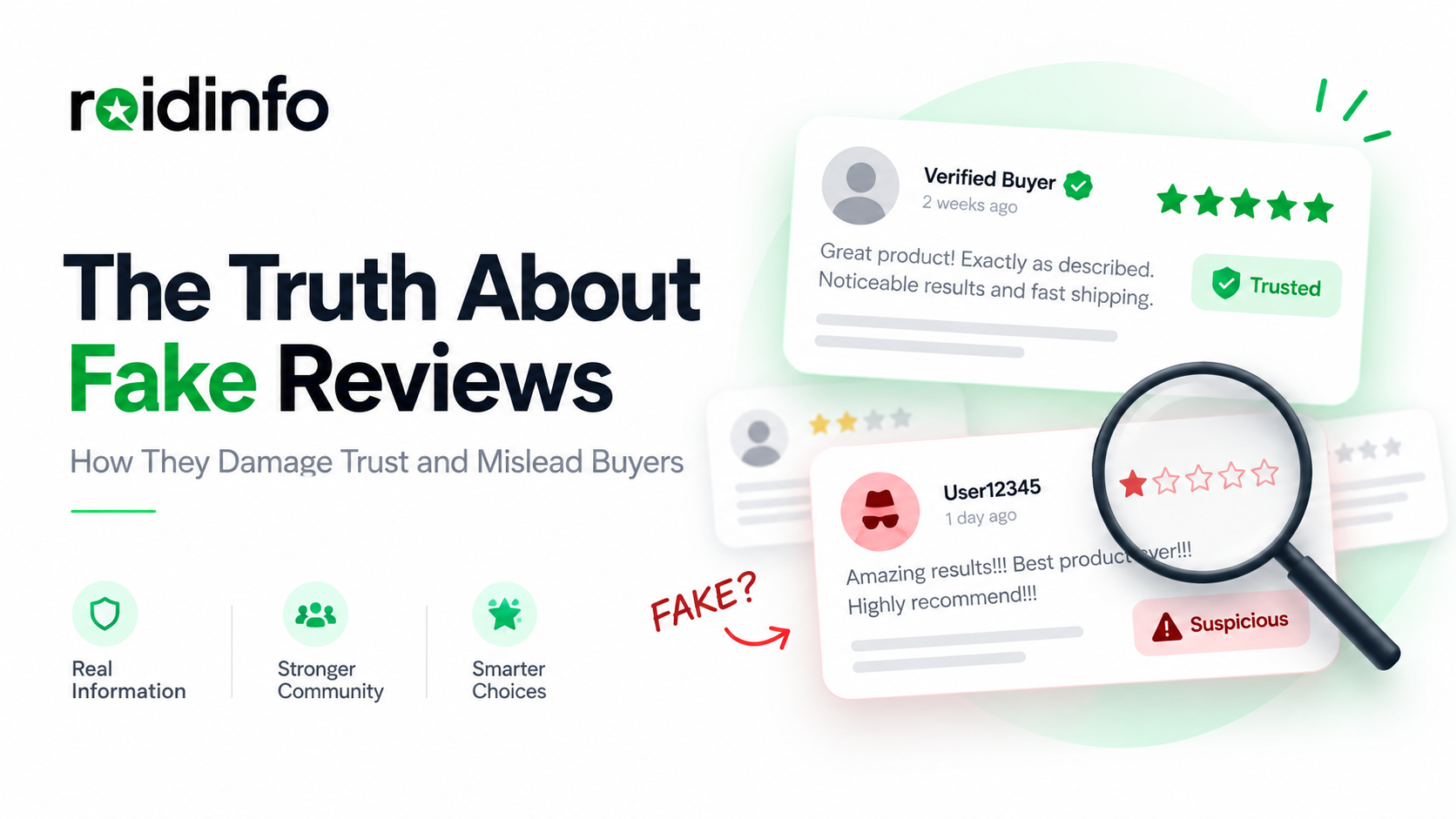
A five-star rating can settle a decision before you read a single sentence. Then you open the reviews. One person says delivery was fast. Another praises the support team. A third says they would order again.
The reassurance depends on something you cannot see: whether those experiences actually happened.
A fake review misrepresents who is speaking, what they experienced, or both. Other forms of manipulation, such as hidden incentives or the selective removal of criticism, can make genuine feedback misleading too. The result is a distorted picture of a business, presented as independent customer opinion.
For readers, the useful question is not whether a review sounds convincing. It is whether there is enough context to give it weight.
The clearest example is an invented experience. Someone describes a purchase they never made, praises support they never contacted, or attacks a business they have never dealt with. The account may belong to a real person; the experience can still be fabricated. Fake negative reviews deserve the same scrutiny as fake praise.
Manipulation also includes less obvious practices. An employee can pose as an unrelated customer. A business can offer a reward that depends on a favorable rating. A review site can present itself as independent while quietly serving the company it evaluates. These practices can mislead readers by presenting controlled messages as independent opinions.
There are important distinctions here. Asking a customer for an honest review is different from purchasing praise. A disclosed incentive does not automatically make an experience fictional, although a platform may prohibit incentives altogether. A reward tied to a required rating compromises the independence of the feedback, even when the incentive is disclosed.
Nor does a disappointing transaction make someone an illegitimate reviewer. A person whose order never arrived has an experience to describe. They should report the failed delivery, not claim to have tested a product they never received.
The immediate harm is a decision made on false information. A reader may overlook unresolved complaints, accept an unreasonable risk, or choose a business they would otherwise have avoided.
Manufactured praise can make an untested business look established and a questionable product look dependable. When a buyer relies on that impression, the damage happens before the product arrives or the service begins.
The wider damage is harder to contain. Imagine discovering that the reviews behind your last purchase were commissioned. On the next purchase, even a detailed, genuine recommendation may leave you wondering who paid for it. An honest reviewer now has to overcome suspicion they did nothing to create.
Businesses lose useful information as well. If complaints about late deliveries disappear while generic praise remains, the public rating stops reflecting the service customers receive. The same distorted record can obscure problems the business needs to fix.
A reputation built that way also creates an awkward question when manipulation becomes visible: what else has been presented more favorably than the facts allow?
No writing style, star rating, or profile badge can settle authenticity on its own. Genuine and fabricated reviews can be difficult to distinguish by appearance.
A better approach is to examine several signals together and keep alternative explanations in mind.
Compare these two illustrative examples:
“Excellent service. Great quality. Highly recommended.”
“The package arrived two days later than expected. Support answered the next morning and refunded the shipping charge.”
The second gives you something to evaluate: a delay, a response, and an outcome. The first gives you a verdict without much explanation.
Neither example proves authenticity. A dishonest writer can invent details, and a satisfied customer may leave only a few words. Specificity makes a review more useful; it does not make it automatically true.
Ask whether the account supports its conclusion. A reviewer who describes delivery can speak to delivery. They have not necessarily established everything else they claim about the business or product.
Repeated unusual phrases, near-identical stories, or several accounts praising the same points in the same order deserve a closer look. Similar wording and tightly clustered posting times may warrant a closer look, especially when they occur together.
Timing needs context, though. A legitimate request for feedback could bring several customers back to a page at once. A new account could belong to someone who registered specifically to describe a serious problem.
Look for a combination of unexplained similarities rather than treating one feature as proof. Several posts repeating an identical, unusual account of a support conversation warrant a different level of scrutiny from several people simply saying delivery was fast.
Before relying on a badge, read its definition. Verification of an email address, confirmation of a transaction, and assessment of a review's claims answer different questions.
An email check establishes access to that address. A purchase record can support the claim that an order was placed. Neither, by itself, proves that every statement in the review is accurate or that the reviewer has no undisclosed incentive.
Both open review systems and systems restricted to verified buyers can receive misleading reviews. An unverified contribution should not automatically be dismissed, and a verified one should not be exempt from scrutiny.
A complaint becomes more informative when you can follow what happened next. Did the business address the specific issue? Did the reviewer later confirm a resolution? Are the two accounts discussing the same order and dates?
Consider the difference between “They fixed it” and an update explaining that the missing item arrived a week later. The latter helps you distinguish a resolved problem from an unresolved promise.
A polite business reply is worth reading, but it is still the business's account. Where the customer and business disagree, preserve that uncertainty rather than assuming the more polished response is correct.
A business with five reviews and five stars may have five genuinely happy customers. There is no reason to manufacture suspicion just because the score is high.
The opposite shortcut is unreliable too. A mixture of praise and criticism does not establish authenticity. Fabricated positive reviews can also use less than the maximum rating to appear more believable.
Instead of searching for an ideal score, examine what the record lets you understand. How much feedback is available? Is it recent enough to answer your question? What do the complaints concern, and do different reviewers describe the same unresolved issue?
A lower rating may reflect a limitation you can accept, while a higher one may tell you very little about the issue that matters to you. The explanation deserves more attention than the decimal.
AI can generate convincing customer-style text, which adds another route for creating fabricated feedback. But identifying AI-written language and establishing whether an experience happened are separate tasks.
A human can write a false review. A real customer can use a writing tool to translate or clarify an honest account. The central issue is whether the review accurately represents the experience and discloses relevant connections, not simply how its sentences were produced.
Automated judgments require caution. Writing style can vary with language background, translation, and editing tools. A language-based flag should therefore prompt closer examination, not serve as conclusive evidence against a reviewer.
A useful moderation workflow would treat an automated alert as a reason to investigate: compare the submission with other activity, examine relevant supporting records, and give a human moderator the context needed to make a decision.
Readers should apply similar restraint. Awkward English does not establish dishonesty. Fluent English does not establish a real purchase.
Review manipulation can have consequences outside the review page. In the United States, the Consumer Reviews and Testimonials Rule took effect on October 21, 2024. Certain deceptive review practices can expose businesses and other participants to enforcement and civil penalties, depending on the circumstances.
Platforms may also remove reviews that violate their rules on fake engagement, undisclosed incentives, or rating manipulation. Each platform sets its own enforcement policies.
The commercial problem does not necessarily end with removal. If customers discover that praise was purchased, deleting the posts does not explain why the business commissioned them. Rebuilding confidence calls for an account of what happened and a visible change in how feedback is collected and handled.
The practical alternative is to ask for honest feedback through a neutral process, without steering the score. Requesting feedback only from customers expected to respond positively can distort the overall picture. Businesses should also understand the rules of each platform where they solicit reviews.
For a business, criticism can identify work that more praise cannot do: a confusing refund policy, a recurring fulfillment delay, or a support promise that keeps being missed.
Readers should be able to find out how a platform collects reviews, what its labels mean, and how it handles disputes. A published policy is useful only if it describes the process accurately.
A responsible review platform should apply rules consistently to positive and negative feedback, explain rating calculations, and investigate suspicious submissions. Removing harassment or spam is different from removing a factual complaint because it lowers a score.
When examining a scoring system, ask what is being weighted. Does the score summarize customer ratings, assess the credibility of submissions, or combine the two? What evidence supports the weighting? How can an error be reported?
An “AI quality score” should not be read as a probability that a review is true unless the platform has established and explained that interpretation. A number can summarize a judgment without proving it correct.
A useful report identifies something a moderator can check: repeated text across different accounts, a disclosed relationship that conflicts with the platform's rules, or an apparent inconsistency in the timeline.
Explain the concern without overstating what it proves. “These three accounts repeat the same unusual paragraph” is more useful than “All these reviewers are fake.” Avoid publishing private information or recruiting others to overwhelm the reporting system. The aim is a fair investigation, not a competing attempt to manipulate the page.
Our published Review Guidelines prohibit paid and incentivized reviews and state that submissions undergo human moderation before publication. They also explain how users can report suspected violations.
Our explanation of the review and scoring process describes contact verification and AI-assisted weighting, and states that sources cannot pay to improve their rankings. Read that explanation alongside individual reviews rather than treating the headline score as a substitute for them. These are descriptions of how submissions are assessed, not a guarantee that every claim is correct.
There is an additional distinction for readers of health-related discussions. A positive delivery report does not establish a product's composition or medical safety. Customer anecdotes alone cannot establish health effects or product safety. Our disclaimer makes clear that user reviews are personal opinions and that the platform does not provide medical advice.
You do not have to prove that a review is fake to decide that it offers too little evidence. You can give it less weight, compare other accounts, or leave the question open.
The most useful reviews help you understand what went well, what went wrong, and what remains unresolved. When a rating cannot answer those questions, keep reading before you let it make the decision for you.