
JD
Guest
Not signed in
Guest
Not signed in
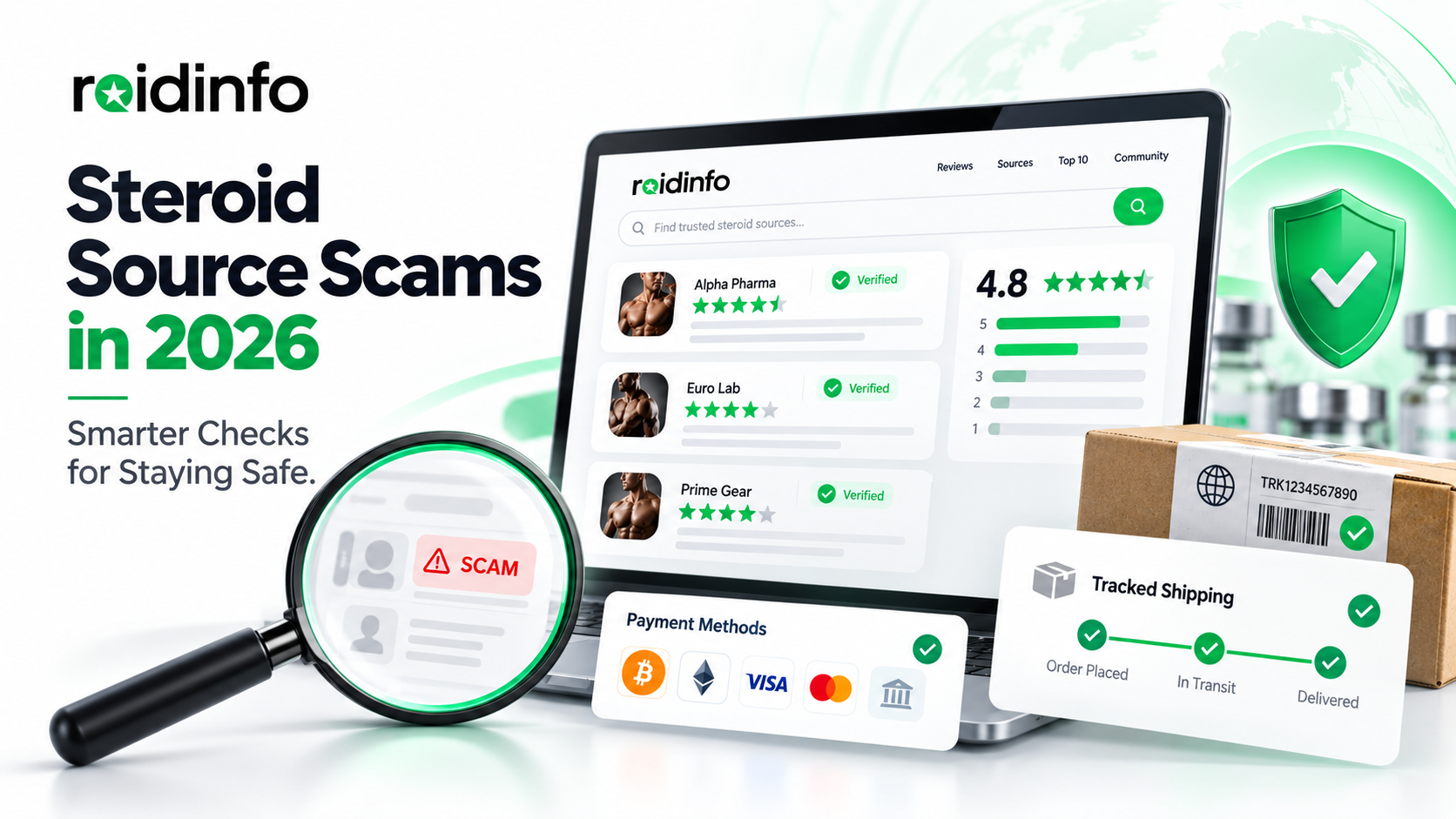
A convincing website does not have to offer an unbelievable deal. Its prices may look ordinary, its pages may read well, and someone may answer your questions promptly. These details can make a business feel familiar before you have established who is behind it.
That is the challenge when assessing steroid source scams in 2026. Avoiding an obviously suspicious page is only the beginning. You also need to ask whether the reviews, payment instructions, and shipping claims support the same story.
This guide follows those checks in sequence, with an emphasis on information you can examine beyond the seller's own website. The aim is to recognize deception and protect your money and personal details, not to endorse a supplier.
Fraud does not depend on poor presentation. Website templates can provide a professional layout, while AI can help criminals produce fluent messages, plausible profiles, and convincing images. Errors that once attracted attention may simply be absent.
A neat storefront therefore tells you little about the operation behind it. The useful question is what supports its claims: an identifiable history, distinct customer accounts, or explanations that can be checked independently.
Our guide to recognizing fake steroid websites examines the storefront warning signs. Here, the focus is on what happens when an apparently credible website is compared with the information surrounding it.
An unusually low price may make you suspicious, but a normal looking price does not settle the question. The same applies to customer service: receiving a courteous answer proves that someone replied, not that every promise on the website is reliable.
Even the browser's security indicators have a limited meaning. HTTPS encrypts the connection; it does not certify the honesty of the business using it. A scam website can use encryption too.
Instead of collecting reassuring details, test the specific claim you are being asked to accept. If a seller says its service is dependable, what do recent accounts describe? If support promises a resolution, does a later update confirm one? Basic checks become more useful when they lead to those questions rather than end the investigation.
Begin with the exact website address. A familiar name in a forum discussion is not enough if the domain differs from the one you are examining. Check that the accounts you find concern the same business and the same period.
Read beyond testimonials selected by the seller. Consult different review platforms and community discussions, paying attention to the origin of each account. Three pages repeating one person's story still represent one underlying experience, not three independent confirmations.
A limited outside history leaves less information to assess. It does not, by itself, prove a scam. Equally, appearing on several websites does not establish legitimacy if the mentions simply repeat promotional material.
When reading steroid source reviews on roidinfo, apply the same standard. Ask what each contribution adds, whether it describes a firsthand experience, and which parts of the account remain unconfirmed.
A star average can hide the sequence of events that matters most. Read how the experience began, what changed, and whether the reviewer explains the outcome. A complaint followed by a confirmed resolution is different from one followed only by another promise.
For example, several separate accounts describing helpful replies before payment and silence afterward would warrant closer examination. The concern is the repeated sequence, not simply the presence of a low score. This is an illustrative pattern, not a claim about any named business.
Check recent feedback alongside older posts, and consider the reviewer as well as the rating. Fake reviews can be positive or negative; an unfavorable comment is not automatically authentic. Read updates before deciding whether a reported problem remains unresolved.
Our article on how fake reviews damage trust explains why convincing wording and apparent agreement need context. When investigating scam steroid sources, look for distinct accounts that support a pattern rather than a collection of repeated verdicts.
Payment requests deserve their own scrutiny. An unfamiliar seller insisting on cryptocurrency, gift cards, wire transfers, or a payment app is a serious warning sign, particularly when the request comes with pressure to act immediately. These methods can offer limited recovery options if something goes wrong.
Look at the instructions as a whole. Does the named recipient match the explanation you were given? Have the payment terms changed without a clear reason? Are questions about the change answered directly, or met with more urgency? Unresolved inconsistencies are reasons to stop.
Do not assume that the opposite proves safety. A familiar payment logo, an orderly checkout, or a written refund policy cannot establish that the person behind the site will honor their promises. No payment method replaces checking the business itself.
A promise of rapid worldwide delivery says little without a clear timeline. Distinguish the stated processing period from the delivery estimate, and compare the promise with what recent reviewers actually describe. Avoid treating one quick arrival as evidence of universal reliability.
Check tracking through the carrier's official website rather than relying on a seller's screenshot. A label created status is not the same as confirmation that the carrier has received the parcel. If an order is marked delivered but has not arrived, investigate the discrepancy with the carrier rather than accepting a dashboard message as the final answer.
Unexpected delivery texts and requests for additional fees need separate verification. Do not use an unfamiliar message link to enter payment details. Contact the carrier through a known official channel. A delivery related message can itself be fraudulent, regardless of the status of the original order.
A consistent process is easier to follow than making a fresh judgment under pressure. Establish which website you are examining, compare recent independent accounts, and identify any contradictions in its payment or shipping claims before disclosing financial or personal information.
Give unresolved questions a clear consequence. You do not need to prove criminal intent before deciding not to proceed. “I cannot verify this claim” is enough reason to pause; it should not become an invitation for the seller to pressure you into accepting it.
Keep copies of the promises, messages, and payment records connected with an interaction. If you suspect fraud after paying, contact the bank or payment provider through its official channels promptly and ask what options are available. Recovery is not guaranteed, and sending more money is not a way to verify the original transaction.
Familiarity can encourage shortcuts. Recognizing a logo or having read positive comments months ago does not answer questions about the current website, payment request, or delivery claim. Recheck the details rather than letting a remembered reputation speak for them.
Another mistake is to research until you find the answer you hoped for. One reassuring comment should not erase several specific concerns. At the same time, criticism should be evaluated on its evidence rather than accepted because it confirms an existing suspicion.
Urgency makes both errors easier. Step away from countdowns, repeated payment reminders, or claims that you must decide immediately. A useful second opinion comes from someone who can examine the situation without sharing the seller's incentive to make you act.
An old discussion can provide background, but it should not be treated as a current assessment. Check the dates of the experiences being described, not just the date a review was published. Look for follow up when earlier posts leave an important issue unanswered.
As presentation tools change, avoid depending on a fixed list of visual clues. Fluent writing and professional graphics are not a substitute for information that can be checked. The same principle applies to automated ratings: understand what a score measures before giving it weight.
A practical way to keep your judgment grounded is to separate three things: what is claimed, what is independently supported, and what remains unknown. Revisit that distinction when new information appears instead of defending an earlier impression.
Recognizing steroid source scams in 2026 means looking for consistency beyond the first impression. Reviews, payment requests, shipping claims, and later updates should be examined together. Where they conflict, a confident explanation is not enough; the discrepancy still needs to be addressed.
Use roidinfo as one part of that research, and examine our approach too. Our Review Guidelines explain submission standards and human moderation. Our review and scoring process describes contact verification and how AI quality scores influence the overall rating. Those processes explain how feedback is handled, not whether every claim is correct.
No review platform or checklist can promise a fraud free outcome, and a positive transaction report does not establish a product's safety. The most useful result of careful research may be recognizing that the evidence is insufficient. When that happens, stopping is a decision in its own right.