
JD
Guest
Not signed in
Guest
Not signed in
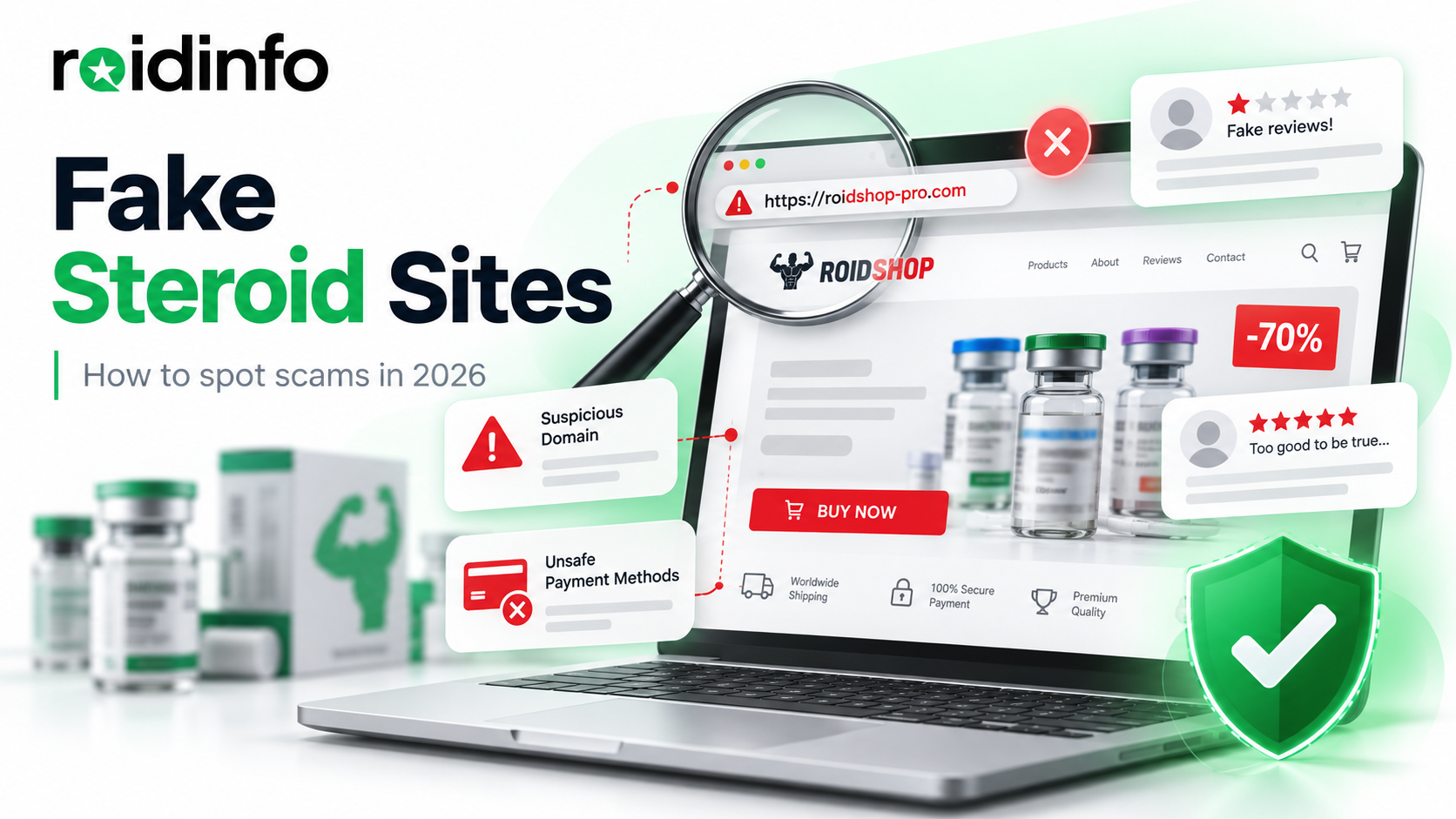
A website can look ready for business before it has earned anyone's trust. The product pages are tidy, the chat window is active, and the testimonials sound reassuring. None of that tells you who is behind the screen or whether their promises have substance.
That is the problem with fake steroid sites: the first impression can be convincing while the evidence is missing. This 2026 guide examines how deceptive websites create that impression, how reviews can expose gaps in the story, and which checks matter before you share money or personal information.
The aim is to recognize fraud, not to endorse a seller. A believable website and a genuine customer review do not establish the safety of a product.
A polished storefront is not a background check. Templates provide a familiar layout; well-written descriptions and attractive images make the page feel complete. Those features tell you about presentation, not accountability.
AI adds another complication. It can help fraudsters produce fluent messages, convincing images, and fabricated profiles with less effort. Waiting for obvious spelling mistakes is therefore a weak way to identify a scam. Equally, polished writing alone is not evidence of wrongdoing.
The better question is whether the website's claims hold up outside its own pages. Does its history support the reputation it describes? Do independent accounts refer to the same domain? Can you verify the identity it presents?
A professional design should never answer those questions on the site's behalf.
The deception may begin with familiarity. A site can imitate an established business through a similar name, copied branding, or a lookalike address. Someone recognizing the logo may overlook the fact that the domain is different.
Another approach is to manufacture the appearance of an established customer base. A page full of testimonials can make a new visitor feel as though everyone else has already checked the business. Unless those accounts can be assessed independently, the reassurance comes from the same website asking to be trusted.
Pressure can follow that reassurance: an offer is supposedly about to expire, or a payment must be sent immediately. Treat urgency as a reason to pause, not a reason to skip checks.
Also distinguish a fake storefront from an unsafe seller. A website does not become trustworthy simply because it sends a parcel. Delivery, product authenticity, and lawful operation are separate questions.
Start outside the seller's testimonial page. Search the exact site name and domain alongside terms such as “complaint” or “scam,” then read the underlying accounts rather than relying on a search snippet or star average.
Look for firsthand explanations: what happened, when it happened, what response was received, and whether the issue was resolved. Several distinct accounts describing the same unresolved problem deserve closer attention than repeated mentions of one original complaint.
Recency matters, but so does context. A new post may describe an old experience, while an update to an older complaint may contain the most useful information. Follow the discussion far enough to see whether the original account changed.
Do not make the opposite mistake of treating every negative review as proof of fraud. A delay and a deliberate non-delivery scam are not the same allegation. Read what the evidence supports, including any uncertainty.
Our guide to how fake reviews mislead readers explains why repeated wording, perfect ratings, and verification labels all need context. The value of a review lies in what you can examine, not how confident it sounds.
Verification is not one decisive test. It is a series of checks that can reveal contradictions, missing information, or reasons to stop. Passing a few of them should not be treated as certification.
Read the address, not just the branding. An extra word, altered spelling, or different domain ending can mean you are looking at a different website from the one discussed in a review.
When someone claims a business has moved to a new domain, look for confirmation through an independently established channel. The replacement site repeating the claim is not independent confirmation.
A domain-registration lookup can show when an address was registered. ICANN's lookup service, for example, provides available registration dates and other public registration data.
Use that information to question the site's timeline. If a page claims a long history but its domain was registered recently, the discrepancy needs an explanation. It is not automatically proof of fraud: a business can change its address. Conversely, an old registration date does not establish who operates the site today.
Look beyond a single recommendation. Do the people commenting describe their own experiences, or are they repeating a reputation? Are the dates and domains clear? Does the discussion include follow-up when something goes wrong?
Several forums quoting the same post still amount to one underlying account. Give more weight to distinct, specific experiences than to the number of places a claim appears.
Check whether the business identity and contact information remain consistent across the site's pages and policies. If something is unclear, a straightforward question about that inconsistency can show whether support addresses the issue or avoids it.
A quick reply is not proof of legitimacy. Judge the substance of the answer, and do not provide identity documents, passwords, or unnecessary personal information merely to test whether someone responds.
Compare the description, packaging information, and any claimed credentials for contradictions. A mismatch is a reason to investigate; a perfect match is not independent proof, because text and images can be copied.
For U.S. readers seeking prescription treatment, use a licensed clinician and a properly licensed pharmacy. Check claimed pharmacy licensing against the relevant state board's records rather than accepting a badge displayed by the seller. Reviews cannot replace those safeguards.
For a closer look at the review side of these checks, our guide to evaluating US steroid vendor reviews separates verification, delivery reports, support, and scoring into distinct questions.
Pay attention to how payment is requested, not just to the checkout design. An unfamiliar seller insisting on gift cards, cryptocurrency, wire transfers, or payment apps is a serious warning sign. These requests can leave consumers with limited ways to recover money after fraud.
Do not send money while the seller's identity or payment instructions remain unresolved. Pressure to act immediately makes the need to stop stronger, not weaker.
An encrypted connection is not a guarantee either. HTTPS protects the connection; it does not certify that the person running the website is honest. Likewise, the presence of a familiar payment logo does not resolve questions about the business behind it.
Stop sending further payments and save the website address, messages, receipts, and transaction records. Contact the bank or payment provider through its official channels promptly, describe what happened accurately, and ask what recovery options are available. A refund is not guaranteed.
If you disclosed a password, change it on that account and anywhere else you reused it, and enable two-factor authentication. Report suspected fraud to the relevant authorities; in the United States, the FTC and FBI's Internet Crime Complaint Center accept reports.
Price can crowd out every other question. An unusually low offer is not a reason to lower your standards of verification. Ask whether you would accept the same missing information without the discount.
Familiarity can have a similar effect. Recognizing a name, image, or layout does not establish that you have reached the same business. Check the address again rather than transferring trust from something that merely looks familiar.
Another mistake is to stop researching as soon as you find reassurance. One positive review should not erase several specific, unresolved concerns. Nor should several websites repeating the same claim be counted as separate confirmations.
Finally, avoid replacing one shortcut with another. Domain age, a fast support reply, polished English, and a high score each answer only a narrow question. None makes the remaining checks unnecessary. As presentation tools change, verifiable details remain more useful than judging how convincing a page feels.
When investigating fake steroid sites, the most useful habit is to separate what a website says from what you can independently establish. Read recent accounts, follow complaints to their latest update, and leave unanswered questions open rather than filling them with reassurance.
Explore steroid site reviews on roidinfo as part of that research. Examine the individual experiences behind a rating, and apply the same scrutiny to our platform. Our Review Guidelines explain submission standards and human moderation, while our review and scoring process describes contact verification and AI-assisted weighting.
These processes explain how feedback is handled; they are not a guarantee that a listed site or product is safe. You do not need conclusive proof of a scam to decide that a website has not earned your trust. Sometimes the most useful result of checking is knowing when to stop.