
JD
Guest
Not signed in
Guest
Not signed in
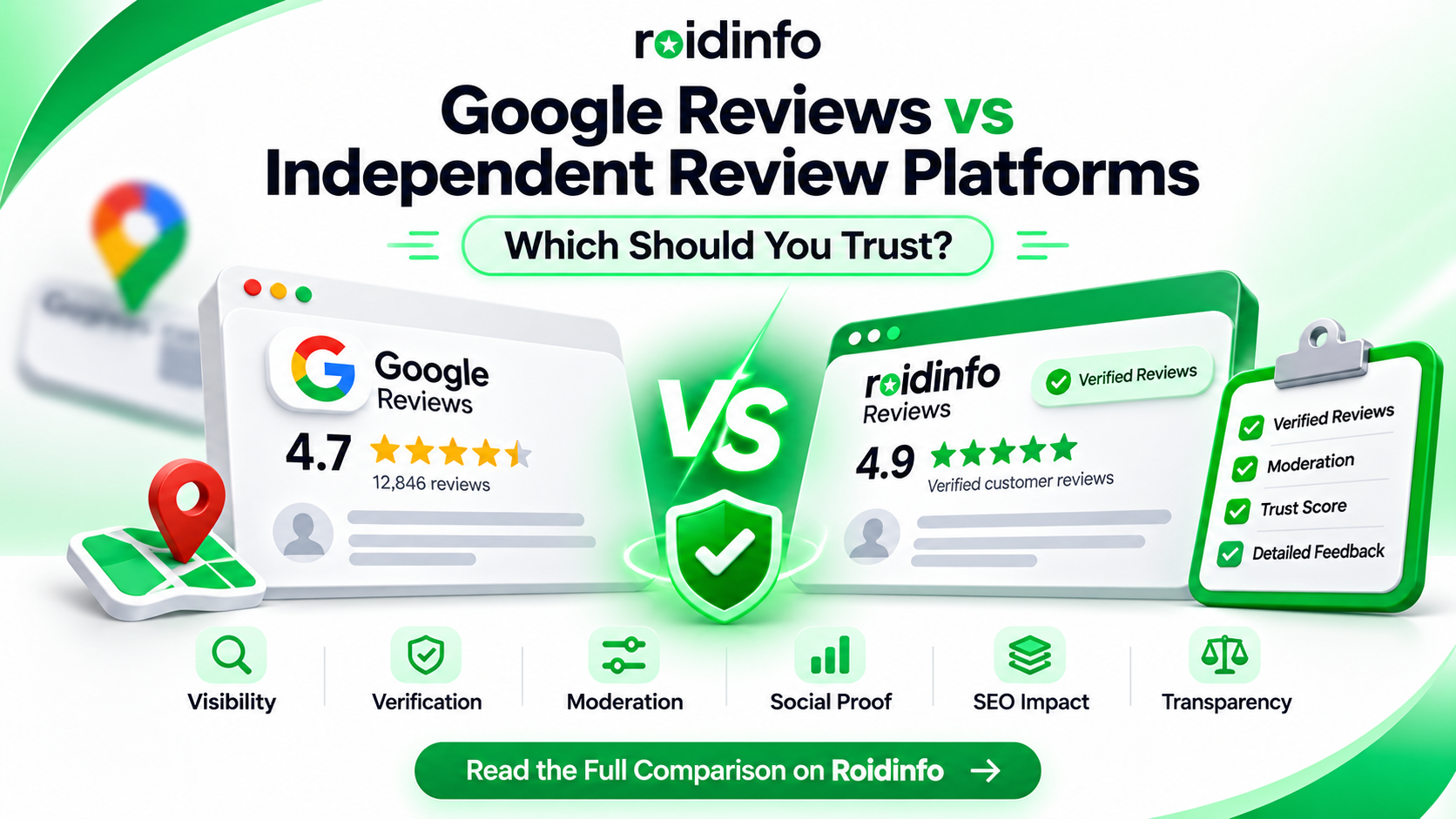
A restaurant with hundreds of Google ratings may be easy to find. A software company with detailed reviews on a specialist platform may be easier to understand. Neither example proves one review system is more trustworthy than the other. They simply reveal what each system is built to do.
The real question in Google Reviews vs independent review platforms is where a review appears, how its credibility can be assessed, and what a reader can learn from it. Google puts customer opinions into Search and Maps, often before someone visits a business's website. Independent platforms can provide a different layer of context, from review source information and moderation policies to more detailed scoring and feedback tied to a specific service.
Choosing between them makes more sense once you separate visibility from evidence. A rating can help someone notice a business; the reviews behind that rating should help them decide what to believe.
Google Reviews are public ratings and written accounts associated with a business's Google Business Profile. They can be seen through Google Search and Maps, putting feedback alongside addresses, opening hours, directions, photographs, and other details people use to evaluate local businesses.
That placement matters for restaurants, clinics, tradespeople, retailers, and service providers whose customers often begin with a location based search. A person looking for a nearby repair shop may encounter its review history without ever visiting the shop's website.
Businesses with a verified Google Business Profile can respond publicly to reviews, giving readers another view of how complaints and compliments are handled. Verification of the business profile, however, should not be confused with independent verification of every customer's transaction.
Independent review platforms operate outside Google's review interface. Depending on the platform, they may provide dedicated business profiles, category comparisons, customer invitations, review source labels, verification checks, moderation, and ratings that explain more than a simple average.
Their features are not universal. One site may focus on product purchases; another on software use cases, employers, professional services, or a specialist industry. Some offer embeddable review widgets and business facing collection tools, while others concentrate on public review records and comparison pages.
The distinction is important: being a third party platform does not automatically make a rating independent or accurate. A worthwhile platform explains who can submit feedback, what it checks, what it removes, and how its score is calculated.
Google's biggest strength is timing. Its ratings can appear while someone is searching for a business by name or looking through nearby options on Maps. The review is part of the discovery experience rather than a separate research trip.
Imagine a customer choosing between two local cafés. Opening hours, distance, photographs, and recent comments are available in one place. That convenience is difficult for a specialist review site to reproduce for every local search.
Reviews also form part of Google's wider local search picture, alongside relevance, distance, and prominence. They can influence how a business is perceived, but no business can buy or request a better local ranking. For companies that depend on visits, appointments, calls, or directions, this visibility is a substantial advantage.
Independent platforms usually reach the customer at a different moment: after initial discovery, when a person wants a closer look at a brand, service, or reputation before making a decision.
Google makes public feedback familiar and quick to scan. What a star rating does not always explain is how the reviewer came to the platform, whether any order related information was checked, or how that particular rating fits into a longer pattern.
A dedicated review site may be able to show an invitation source, a direct submission label, the relevant product or service, a history of follow ups, or the reason behind a weighted score. These details matter when two businesses have similar averages but very different review histories.
Consider two four star profiles. One contains fresh, specific accounts of delivery, communication, and problem resolution. The other consists largely of vague praise posted long ago. The headline numbers match; the supporting evidence does not.
For readers who want to examine the difference, our article on review credibility beyond star ratings explores how review dates, firsthand details, and scoring context change the interpretation of a rating.
Verification is often treated as an all or nothing badge. In practice, there are several separate questions: Is the account linked to a real contact method? Is there evidence of a customer interaction? Was the comment invited after a service? Has the platform checked that the submission follows its rules?
Google requires reviews to reflect genuine experiences and prohibits fake or incentivized engagement. That policy is important, but a Google rating is not the same as a receipt confirmed purchase, and a verified Business Profile does not establish that every reviewer is a customer.
Independent services can introduce additional checks, including order related documentation or labeled submission sources. Readers still need to know what each badge proves. An email confirmation identifies a reachable account; it does not establish that an order was placed. Evidence of a transaction may support the reviewer’s account without confirming every assertion in the comment.
A credible review system makes those limits visible rather than using the word verified as a blanket promise. The best signal is one readers can understand, not simply one that looks reassuring.
Both Google and independent platforms have to deal with fabricated praise, malicious complaints, spam, conflicts of interest, and review campaigns designed to shift a public score. Neither category is immune. The real difference lies in the rules, enforcement, and transparency around disputed content.
Google prohibits review incentives, fake engagement, and the selective solicitation of favorable feedback. Businesses can report policy violations, but an uncomfortable opinion is not grounds for removal. Third party platforms should apply the same basic distinction: moderate abuse and deceptive submissions without treating legitimate negative experiences as a reputation problem to erase.
This is more than a design choice. In the United States, the FTC's consumer reviews rule addresses practices including fake testimonials, certain paid reviews tied to sentiment, and deceptive review suppression. Responsible review collection should therefore be treated as an integrity issue, not merely a marketing tactic.
Our guide to how fake reviews mislead buyers and damage trust looks at the warning signs and why manipulated feedback can undermine genuine opinions along with dishonest ones.
Google Reviews do their strongest work within Search and Maps. Independent review services can be useful elsewhere, particularly when a website needs customer accounts relevant to a specific product, service, or decision.
Where a provider supports them, review widgets, compact rating badges, or attributed testimonials can sit beside a demo request, product description, pricing table, or checkout step. A useful widget answers the question a visitor is asking at that moment. A comment about onboarding belongs near a software signup; an account of delivery and support may be more relevant on a product page.
Context makes the display credible. Show the date, source, written review, and a meaningful verification label when available. Link to the full review record instead of presenting a handful of chosen compliments as the whole picture. A sleek carousel is not a substitute for transparent selection.
Not every independent review platform offers website widgets, and a widget is not proof of review authenticity on its own. Businesses should verify which publishing features their chosen service actually provides.
Google Business Profile reviews can support local discovery. Google says more reviews and positive ratings can help local ranking, alongside other factors. That benefit is distinct from adding review markup to a page on a company's own website.
Independent review sites may publish indexable profile pages with useful firsthand content. Some pages may also qualify for search features when they follow Google's rules for Review or AggregateRating structured data. The review must concern an eligible, specific item, and the marked up information needs to be visible and accurate. Valid markup creates eligibility, not a promise that stars will appear.
An important restriction: Google does not display review star rich results for self serving LocalBusiness or Organization reviews on a business's own site when that business controls the reviews about itself. Embedding a third party review widget does not bypass the rule. Nor should businesses combine ratings copied from other sites into a fabricated aggregate score.
For SEO, the durable value of reviews is well organized, genuinely useful content. Structured data should describe what is already there, rather than manufacture signals the page cannot support.
A dedicated platform may give a business more ways to request reviews, organize feedback by category, or display selected material on its website. That flexibility is useful only when the selection process is clear. Customers should be able to distinguish an independently collected review from a testimonial chosen by the company it praises.
The same applies to moderation and scoring. Does the platform explain what triggers removal? Are negative comments judged by the same standard as positive ones? Is the score a simple mean, a weighted calculation, or something else entirely? A rating becomes easier to assess when the method is open to scrutiny.
Google provides a familiar public environment and a defined set of contribution policies. Independent platforms vary more in presentation and review management options. Neither arrangement eliminates the need for fair rules and visible accountability.
For a business that relies on local demand, Google is often the first review channel to maintain carefully. Restaurants, dental practices, repair services, salons, and neighborhood shops are discovered through searches where proximity and business details matter immediately.
An accurate Business Profile, relevant photographs, genuine recent feedback, and thoughtful public replies help prospective customers assess the business before they visit its website. Review requests should go to real customers without rewards tied to favorable ratings or pressure to say particular things.
A useful rule of thumb: if the next customer is likely to search “near me,” check opening hours, or request directions, Google Reviews deserves serious attention.
Some decisions are not primarily local. A software buyer compares features and support across vendors. An online service customer wants to understand billing problems or long term reliability. A specialist community needs context that a broad star rating may not be designed to capture.
In those cases, a dedicated platform may offer stronger ways to compare experiences: service categories, review source information, follow up histories, moderation standards, or quality weighted scores. SaaS companies, e commerce brands, agencies, marketplaces, and specialist industries may all benefit from that additional detail.
The right platform depends on the audience and the evidence it needs. A review archive with clear submission rules may be more useful than a beautiful badge with no explanation behind it. Features should be assessed individually, rather than assumed because a site calls itself independent.
Often, yes. The channels answer different questions at different stages. Google can help someone discover a local business and see an immediate public impression. A specialist review profile or a relevant collection of customer accounts can help that same person investigate the details afterward.
The two records should complement each other, not be forced into one inflated number. Encourage authentic feedback under each platform's rules. Keep dates and sources intact when referring to reviews elsewhere, and never imply that a rating was verified in a way it was not.
For the customer, the benefit is a fuller picture: an accessible first impression followed by the evidence needed to challenge or confirm it. A trustworthy review strategy does not depend on every channel saying exactly the same thing.
Roidinfo Steroid Source Reviews illustrates the specialist side of this comparison. Rather than functioning as a local discovery tool like Google Maps, Roidinfo organizes source profiles and community feedback around an industry specific review record. The emphasis is on examining individual experiences and the signals that contribute to public ratings.
Roidinfo describes contact method verification for reviewers, human moderation before publication, review source information, and AI assisted quality scoring used in its weighted trust score model. These checks provide context, but they should not be confused with a universal proof of purchase system or independent confirmation of product contents. Our published review submission standards also state that feedback must reflect direct experience and prohibit paid or incentivized reviews.
That is where the comparison becomes useful. Google's reach makes it a practical starting point for many local decisions. A specialist platform can offer a more focused record for a narrower subject, with the value of that record depending on the quality, recency, and independence of the underlying feedback.
Neither an algorithmic score nor a positive review removes the need for judgment. In regulated or medically sensitive categories, customer comments about delivery or support also cannot establish a product's safety or legal status.
Google Reviews vs independent review platforms is not a contest with one permanent winner. Google's strength is visibility at the moment of search. The strength of a good independent platform is the additional context it can provide when a rating needs closer examination.
For local businesses, the first channel may be essential. For complex online services and specialist subjects, the second may reveal details that a familiar five star display leaves out. Using both can help, provided the review collection and presentation remain honest.
The most trustworthy place to read a review is the one that lets you see what happened, understand what was checked, and recognize what the rating still cannot tell you.