
JD
Guest
Not signed in
Guest
Not signed in
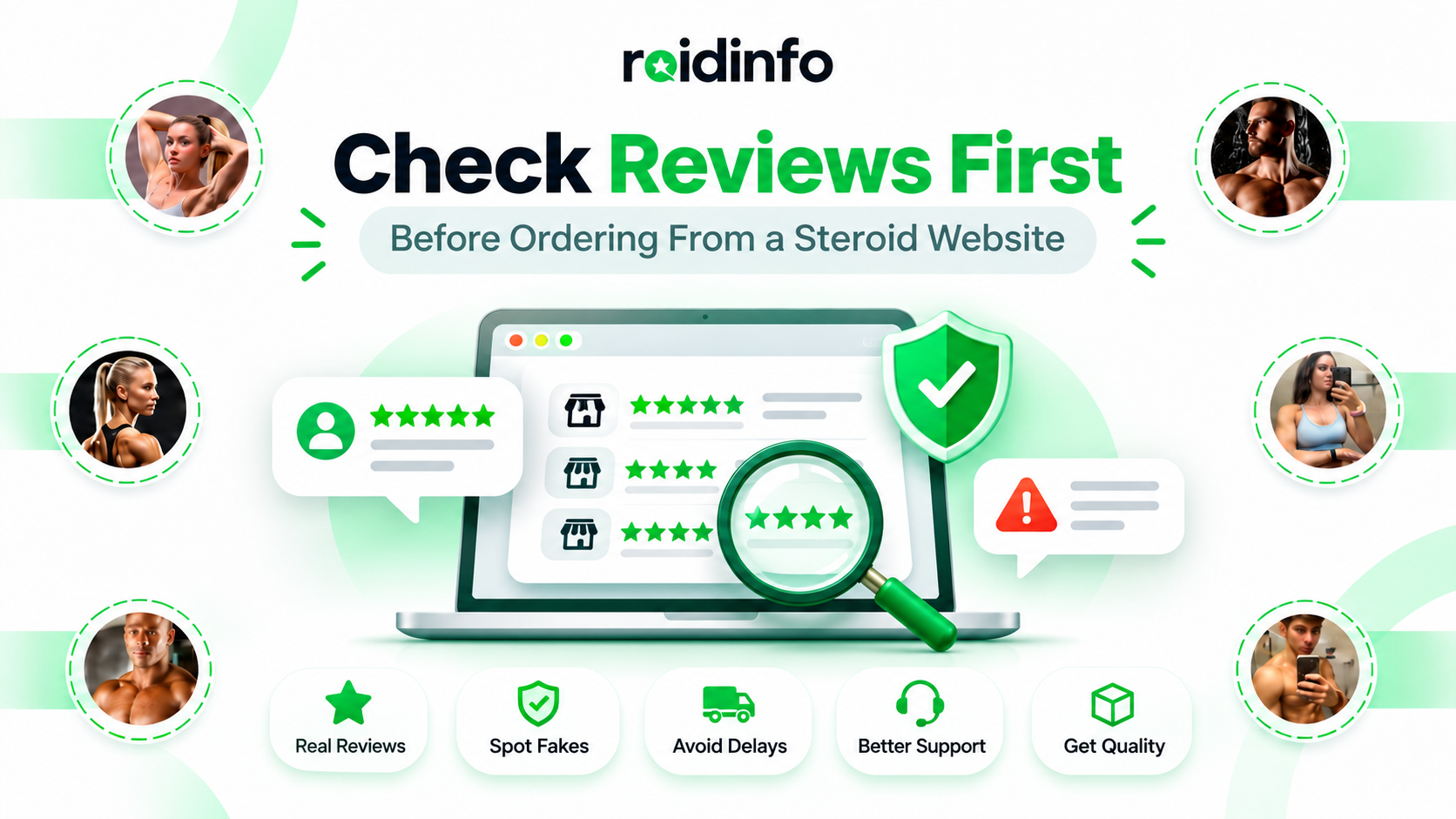
The online steroid market has changed considerably over the years. Websites have become more sophisticated, branding has become more professional, and businesses increasingly rely on customer testimonials and public ratings to establish credibility. However, an impressive website does not necessarily reflect the experiences of the people who have interacted with it.
This is precisely why steroid source reviews deserve attention. Behind every rating is a collection of individual experiences, complaints, expectations, and opinions. When examined carefully, this information can reveal patterns that are not immediately visible on a website itself.
The challenge is knowing how to interpret those reviews. Not every positive comment is genuine, not every negative experience tells the complete story, and a high average rating does not automatically establish credibility.
Understanding the difference between meaningful feedback and misleading online reputation signals is essential when researching this market.
Unlike conventional retail businesses, many websites operating in the underground steroid market exist outside established pharmaceutical distribution and regulatory systems.
This creates an environment where publicly available information can be difficult to verify. Websites may use professional designs, detailed product descriptions, recognizable branding, and customer testimonials without providing independently established evidence to support their claims.
Another challenge is the relatively short lifespan of some online operations. A website may disappear, change its identity, or reappear under a different name, making historical information difficult to interpret.
These circumstances make independent discussions particularly relevant. They provide additional context beyond the claims published by individual websites.
Without examining that context, it is easy to mistake professional presentation for an established reputation.
Customer reviews offer something that promotional material cannot: accounts of individual experiences.
People discussing an online business may describe communication problems, unresolved complaints, misleading information, payment disputes, or differences between advertised services and their actual experiences.
When several unrelated reviewers describe similar problems, those similarities deserve attention.
However, the number of reviews alone is not enough. A profile containing hundreds of short, repetitive comments may provide less meaningful information than a smaller collection of detailed and varied accounts.
When examining online steroid reviews, consider the following elements:
The amount of detail provided by individual reviewers.
The dates on which comments were published.
Whether different reviewers describe similar experiences.
Whether negative feedback is visible.
Whether complaints receive meaningful responses.
Whether the review platform explains its moderation procedures.
These details provide a more complete understanding of an online reputation than a star rating alone.
An online business with little or no independent review history presents an important information gap.
A recently established website may simply not have accumulated enough public feedback. However, the absence of complaints should not automatically be interpreted as evidence of reliability.
The distinction between having no negative reviews and having no meaningful review history is important.
The same applies to websites displaying testimonials exclusively on their own pages. Businesses control the content and presentation of their websites, which means internally published testimonials should not automatically be considered independent customer feedback.
A lack of external discussion makes it harder to establish whether public claims accurately represent previous experiences.
In this situation, uncertainty should be acknowledged rather than replaced with assumptions.
Identifying meaningful feedback requires looking beyond the overall sentiment of a comment.
Genuine customer experiences often contain specific details about what happened, when it happened, and how the situation developed.
For example, a detailed account might explain:
The nature of a communication problem.
How long a particular issue remained unresolved.
Whether the business provided an explanation.
What happened after a complaint was submitted.
Whether the experience differed from previous interactions.
Not every genuine review needs to be long. Some people naturally write short comments, while others prefer to describe an experience in considerable detail.
What matters is whether the available information provides context and whether similar accounts can be independently examined.
Review authenticity should be evaluated through patterns rather than assumptions about an individual reviewer's writing style.
Fake positive reviews can create an artificial impression of popularity and credibility.
Some are written using generic promotional language, while others imitate ordinary customer experiences. More sophisticated examples may contain realistic details designed to make the feedback appear independent.
Several warning signs deserve attention.
When multiple comments contain almost identical expressions, sentence structures, or promotional phrases, the similarities may indicate coordinated activity.
A review profile containing nothing but enthusiastic praise can provide an incomplete picture. Real-world experiences are rarely identical, and legitimate businesses can receive criticism.
Unexpected increases in positive ratings deserve examination, particularly when the comments appear within a short period and share similar language.
Comments that repeatedly describe a business as excellent without explaining any particular experience offer limited information.
These characteristics do not individually prove that reviews are fabricated. However, several warning signs appearing together can weaken confidence in a review profile.
Independent review platforms and public communities can provide perspectives that are not available on a business's own website.
However, independence does not automatically guarantee accuracy. Every platform has its own moderation policies, verification procedures, and limitations.
When researching public reputation, it is useful to distinguish between first-hand accounts, anonymous opinions, verified submissions, and information that has been independently documented.
For readers interested in examining these differences, Roidinfo provides a dedicated place to explore discussions surrounding steroid source reviews, online reputation, and review credibility.
The broader objective of independent review platforms should be to make information easier to examine, not to replace critical thinking with another numerical score.
One negative comment does not establish that an entire business is fraudulent. Likewise, one positive testimonial cannot establish that every public claim is accurate.
Repeated patterns provide a more useful basis for understanding reputation.
Imagine several unrelated users describing similar communication problems over an extended period. Even if their individual experiences differ, the recurring subject may indicate an issue worth examining.
The same principle applies to positive feedback.
When different people independently describe similar experiences, those accounts provide additional context. Nevertheless, consistency in customer opinions should not be confused with independent verification of pharmaceutical quality or product safety.
The distinction between individual experiences and independently established facts should remain clear throughout any review analysis.
Online discussions frequently focus on product-related experiences, but reputation involves considerably more than individual product claims.
Other subjects can reveal important aspects of how a website presents itself and interacts with its audience.
Communication and customer support
Public complaints may describe unanswered messages, unclear explanations, or unresolved disputes. The nature of these accounts can reveal recurring problems in customer communication.
Business transparency
Information about business identity, policies, and publicly stated terms provides context when examining an online operation.
Payment-related complaints
Accounts describing disputed transactions, unexpected charges, or unresolved payment issues can highlight concerns that deserve further examination.
Consistency over time
A collection of recent and historical reviews can show whether the public conversation surrounding a website has changed.
These subjects help explain why reputation cannot be reduced to a single average rating.
Online reputations change.
A website that received considerable attention several years ago may have a very different public image today. Changes in ownership, management, business practices, and customer experiences can all influence the nature of public feedback.
This makes publication dates an important part of review analysis.
Older comments provide historical context, but they should not automatically be treated as descriptions of current circumstances.
Similarly, a sudden increase in positive or negative feedback should be examined alongside the wider review history.
A meaningful reputation assessment considers both historical information and recent discussions rather than relying exclusively on either.
Online marketing frequently uses limited-time promotions, attractive discounts, countdowns, and scarcity messaging to encourage immediate decisions.
These techniques can influence how people interpret information.
When attention is focused on a promotional offer, it becomes easier to overlook missing details, questionable claims, and unresolved concerns.
This is why taking time to examine available information matters. Decisions made under artificial pressure are more likely to overlook important details.
A critical approach means questioning promotional language, examining the available evidence, and resisting the temptation to interpret urgency as credibility.
Developing a more informed approach to online reputation does not require complicated research methods.
It requires consistency and an understanding of what review information can actually demonstrate.
Consider these principles when examining online feedback:
Read the content of reviews instead of relying exclusively on star ratings.
Pay attention to publication dates and historical changes.
Distinguish first-hand experiences from promotional statements.
Look for repeated patterns across independent discussions.
Examine how negative feedback is presented and moderated.
Be cautious about claims that cannot be independently established.
These habits make it easier to interpret online discussions without allowing individual comments or impressive-looking ratings to dominate the overall picture.
Even people who regularly research online businesses can make mistakes when interpreting customer feedback.
One common mistake is treating a high average rating as proof of credibility. A numerical score cannot explain how reviews were collected, whether they were independently submitted, or how moderation decisions were made.
Another is dismissing negative comments without examining their details. Some complaints may be incomplete or inaccurate, but repeated reports describing similar problems deserve attention.
Review volume can also be misleading. A large number of comments does not necessarily mean that a platform has verified the underlying experiences.
Finally, relying on a single source of information can create an incomplete understanding of public reputation.
A more balanced interpretation considers the quality, origin, timing, and consistency of available feedback.
The online steroid market contains considerable uncertainty, and professional website design or impressive customer ratings cannot eliminate it.
Independent feedback provides valuable context, but its usefulness depends on how carefully it is examined. Fake testimonials, incomplete review histories, manipulated ratings, and outdated information can all distort the way an online business is perceived.
Understanding steroid source reviews means looking beyond the headline score and examining the experiences, patterns, and evidence behind public claims.
At Roidinfo, the discussion surrounding online reputation and review authenticity remains an important part of understanding this complicated market.
Ultimately, the most useful review is not necessarily the most positive or the most detailed. It is the one that provides meaningful information, can be evaluated in context, and does not ask readers to accept unsupported claims as facts.